How to Paint a Deck: Expert Tips from MR Paint

Curious if a fresh finish can make your outdoor space feel brand new?

We are MR Paint — based in South Amboy, NJ — and we have served Central New Jersey since 2011. Our team delivers detail-driven craftsmanship and clean work that lasts for years.

If you want a modern, durable result, we guide you through product choice, surface prep, and scheduling. We promise clear communication, reliable timing, and guaranteed results.

We serve locations within a 35-mile driving radius and handle every step — from selecting the right deck paint and color to final inspection. Call (908) 963-7371 or email info@mrpaintnj.com for a consult.

Key Takeaways

  • Decades of care: MR Paint has delivered quality service since 2011.
  • Local focus: South Amboy team serving a 35-mile radius.
  • Clean work: Preparation and tidy sites matter for lasting results.
  • Expert guidance: We help choose paints and color that hold up over time.
  • Guaranteed finish: Reliable scheduling and satisfaction you can trust.

Essential Preparation for Your Deck Project

Good prep turns a finicky surface into a reliable canvas for lasting color.

Proper cleaning is the first step. You may need a quality deck cleaner to remove dirt and mildew. A clean deck helps your chosen deck paint or stain last longer.
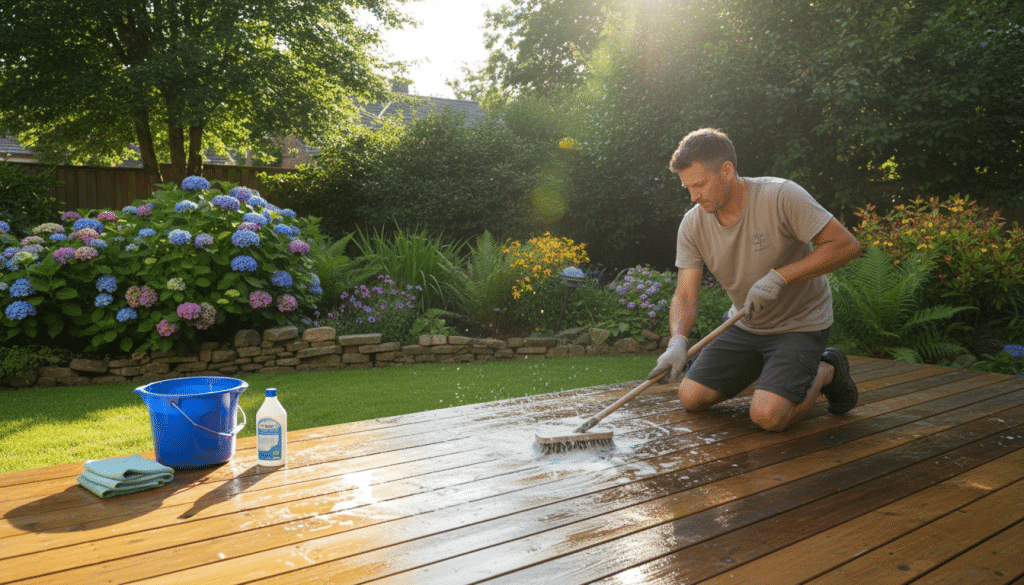
A sunlit deck surrounded by lush greenery, situated in a residential backyard. In the foreground, a focused worker in modest casual clothing scrubs the wooden deck with a brush and cleaning solution, creating foam and splashes that glisten in the sunlight. The middle ground showcases a half-cleaned deck, revealing bright natural wood tones, with a bucket and cleaning supplies neatly arranged nearby. The background features a well-maintained garden with colorful flowers and shrubs, creating an inviting atmosphere. The lighting reflects a warm and vibrant afternoon glow, enhancing the colors and textures of the wood and foliage. The overall mood is lively and productive, emphasizing the importance of preparation in deck maintenance.

Cleaning and Surface Repair

We recommend a Sun Joe pressure washer with a rotating tip for cleaning. The rotating tip lifts grime without gouging the wood grain.

Use a stiff brush on tight spots. Remove all loose material when you find deck peeling — that loose paint will make new paints fail.

Sanding and Stripping Old Paint

If old finish is cracked or loose, you’ll need sand and strip that area. A variable speed rotary grinder fitted with 3M Sandblaster pads works fast on stubborn paint.

  • Step one: Clean deck thoroughly with a deck cleaner.
  • Step two: Use pressure and a stiff brush for heavy grime.
  • Step three: Remove deck peeling with sand or a grinder and Sandblaster pads.

Choose your paint stain or stain deck choice based on wood condition. Protect the surrounding area with drop cloths — chips and chemicals travel.

How to Paint a Deck Like a Professional

A pro approach blends technique, timing, and the right tools for the best finish. We work from the farthest corner and move toward the exit. This keeps footprints off wet boards and preserves a clean finish.
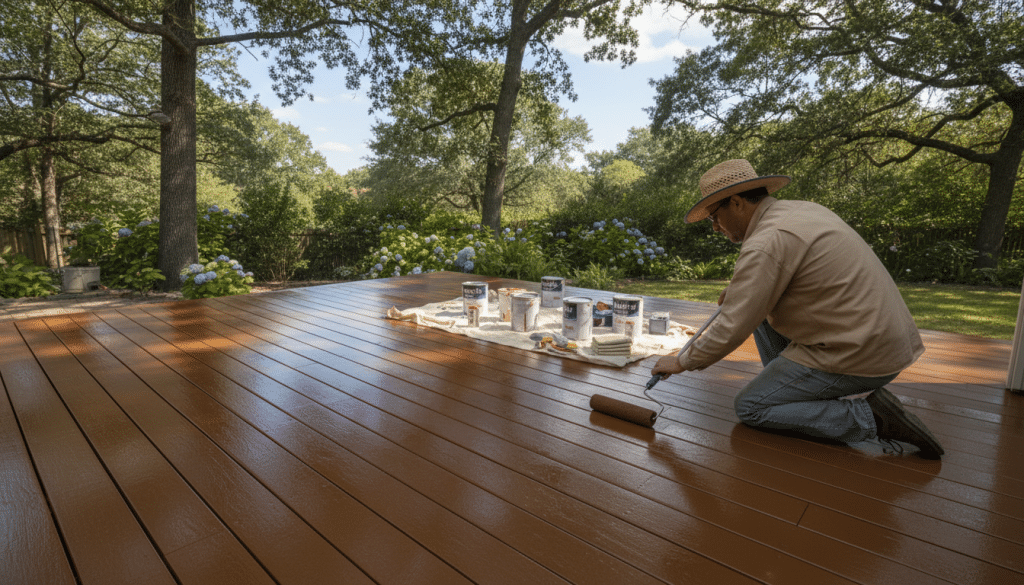
A beautifully treated wooden deck, freshly painted in a rich, warm color, dominates the foreground, showcasing a pristine surface with a slight sheen. A professional painter, dressed in modest casual attire, carefully strokes the paint onto the deck with a roller, exhibiting perfect technique. In the middle ground, a well-organized selection of paint cans, brushes, and drop cloths emphasize professionalism and preparation. Soft, natural lighting filters through surrounding trees, creating a serene atmosphere that highlights the textures of the wood and paint while casting gentle shadows. The background features a lush garden and a clear blue sky, enhancing the feeling of a sunny, productive day. The scene captures the essence of expert craftsmanship in deck painting, inviting viewers to gain insights into professional techniques.

Keep a wet edge while rolling. That prevents lap marks and yields an even color across wood grain. Use a roller for broad coverage and a brush for grooves and rail ends.

  • Sequence: One coat of primer, then two coats of finish for full protection.
  • Technique: Work paint into the grain; patience here pays off over years.
  • Tools: A sprayer saves time but practice first to avoid drips and uneven pressure.
  • Teamwork: One person rolls; the other follows with a brush to preserve the wet edge.
  • Finish check: A second coat may be needed for full color saturation, especially over dark stains.

Every step — from the first roll to the final brush stroke — adds durability. We recommend the right tools and steady work for lasting results.

Selecting the Best Materials and Tools

Choosing the right materials and tools sets the stage for a lasting finish. We focus on compatibility—match your finish to the wood and traffic the surface will see. This reduces future work and keeps color true.
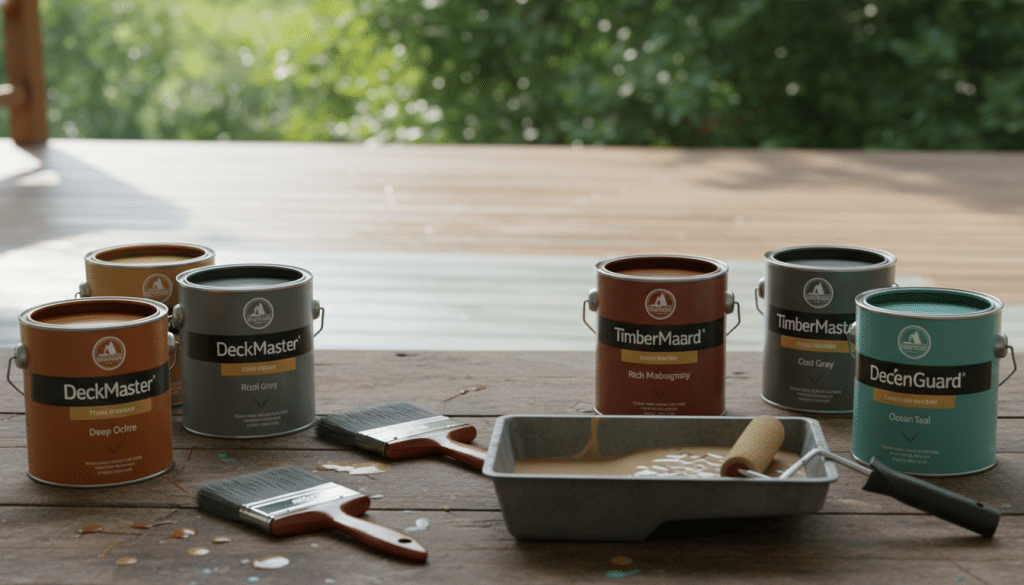
A vibrant image featuring various cans of deck paint displayed prominently in the foreground, showcasing an array of colors like deep ochre, rich mahogany, and cool gray tones. The middle ground should feature expertly arranged painting tools such as brushes, rollers, and a paint tray, all positioned on a wooden surface to convey a workshop atmosphere. The background should be softly blurred, revealing a sunlit outdoor deck scene with freshly stained wood, setting a serene, inviting mood. Natural light filters through foliage nearby, enhancing the colors of the paint and tools while creating a warm ambiance. Aim for a realistic, detailed composition that evokes excitement for home improvement projects.

Choosing Between Paint and Stain

Paint gives opaque coverage and long-term color uniformity. It wears well in high-traffic spots but may need cracking repairs later.

Stain soaks into wood and highlights grain. Solid stains offer strong protection; transparent stains show more natural character. Pick the finish that fits your aesthetic and maintenance plan.

Essential Brushes and Rollers

Use a 1/2″ nap roller cover for even spread across boards. That nap handles minor texture and prevents streaking.

For edges and corners, a 2–3 inch angled brush gives control. Keep brushes and rollers ready before you start—this saves time and avoids unplanned store runs.

The Role of Primers

Prime problem areas—especially knotty wood. We recommend a premium primer like Zinsser to block knot bleed and improve adhesion.

  • Sprayers: Consider Graco Magnum X5 or Wagner Flexio 590 for fast, professional results.
  • Second coat: You’ll often need a second coat for full color depth and protection.
  • Quality tools: Invest in the best products you can afford to minimize future work.

Long-Term Maintenance for Lasting Results

Routine inspections catch chips and cracks early—saving time and money down the road. Inspect once every summer. Look for small peeling, loose boards, and color fade.
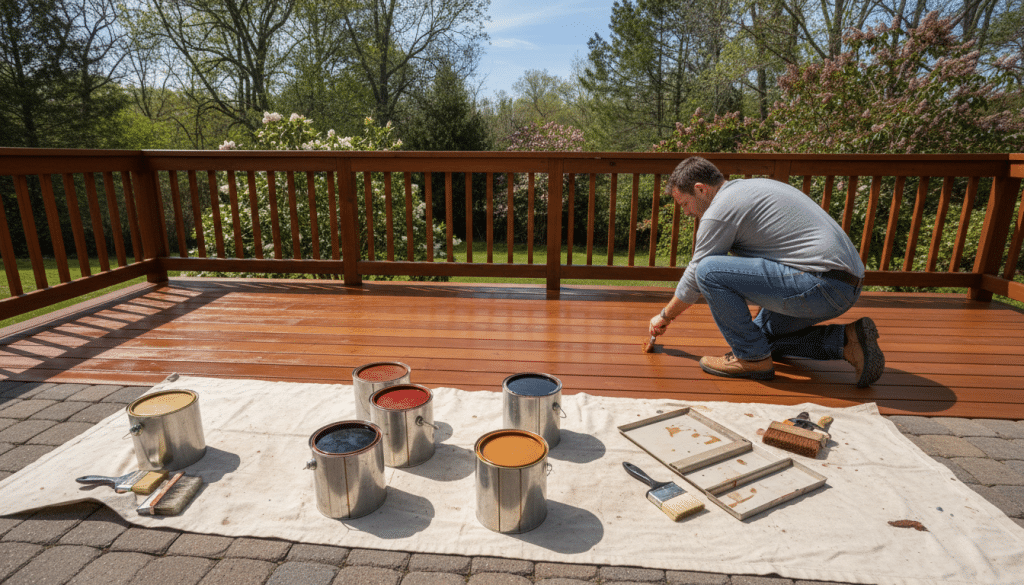
A skilled professional in modest casual clothing meticulously applies a fresh coat of paint to a wooden deck in a backyard setting. In the foreground, there are pails of vibrant paint and brushes resting on a neatly laid-down drop cloth. The middle ground showcases the nearly finished deck, with a beautifully textured surface, revealing a rich, warm stain that enhances the wood grain. The background consists of lush greenery and a clear blue sky, indicating a sunny day that casts soft, natural light on the scene. The overall atmosphere is one of care and dedication, highlighting the importance of long-term maintenance for deck longevity. The image is captured at a slight angle that provides depth, showcasing both the person at work and the beautiful deck.

Annual Inspection and Touch-Ups

Start with a quick cleaning. Use a mild deck cleaner and a gentle pressure washer setting. This removes dirt and mildew without harming the wood or finish.

If you spot chips or loose paint, remove failed material with a scraper or light pressure. Let the area dry completely.

  • Perform an annual inspection every summer to catch issues early.
  • Use a pressure washer carefully or a scraper for loose material before applying a fresh coat.
  • Keep a small brush on hand—quick touch-ups save major work later.
  • Match primer and paint or stain for consistent color and adhesion.
  • Follow a seasonal cleaning routine to prevent mildew and extend the life of your finish.

We focus on practical steps that protect your investment. Regular care—small work done at the right time—keeps colors true and surfaces strong. Trust MR Paint to guide the choice of tools and products so you get durable, long-lasting results.

Conclusion

A proper finish lifts appearance and guards wood from weather and wear. A single well-planned paint deck project gives lasting value and curb appeal.

Follow thorough cleaning, spot priming, and a quality coat for a durable result. Small, regular checks and seasonal touch-ups keep surfaces strong and colors true.

If the project feels big, we stand ready. We deliver honest timelines, premium paints and stains, and careful, clean work you can trust. Call MR Paint for a consult and confident results on your deck.
FAQ

What’s the first step before starting a deck project?

Start with a thorough cleaning. Use a pressure washer set to a safe PSI or a stiff brush plus a deck cleaner. Remove dirt, mildew, and loose finish. Let the wood dry fully—usually 24–48 hours in good weather—before any sanding or coating.

When should we repair surface issues?

Inspect for loose boards, protruding nails, and rot. Replace damaged boards and fasten loose ones. Fill small cracks and gaps with a wood filler rated for exterior use. Repair now for a smooth, durable finish later.

Do we need to sand or strip old finish?

Yes—if old paint or stain is peeling, sand or use a chemical stripper to remove failing layers. Smooth rough areas and feather edges where finish remains. Light sanding is enough for weathered but intact surfaces.

Paint or stain—which is better?

Choose based on look and protection. Solid or semi-solid stains hide flaws and show wood texture. Deck paints give a uniform, durable film and more color options. Both require clean, dry wood and proper prep for best longevity.

What primers and undercoats do we use?

Use an exterior primer compatible with your chosen topcoat—oil-based for traditional paints, latex for water-based systems designed for decks. Primers improve adhesion and extend wear, especially on bare or repaired wood.

Which brushes and rollers work best?

Use angled sash brushes for edges and detailed cuts. For broad areas, a ⅜”–½” nap roller or a specialized deck roller covers evenly. Choose synthetic bristles for water-based finishes and natural or blended bristles for oil-based products.

Can we spray finish instead of brushing and rolling?

Sprayers speed up coverage and get into gaps. Always back-roll or brush immediately after spraying to ensure full penetration and even film. Mask nearby areas—overspray will travel.

How many coats will we need?

Most systems need two coats of topcoat after primer or a manufacturer-recommended single coat of high-build products. Follow product instructions and allow proper dry time between coats for adhesion and durability.

How long does each coat need to dry?

Dry times vary by product, temperature, and humidity. Typical recoat windows range from 2–24 hours for water-based finishes and longer for oil-based products. Check the label and avoid early foot traffic.

When is it okay to place furniture back on the surface?

Wait the full cure time—often 48–72 hours for light use, up to a week for heavy furniture. Cure times ensure the coating reaches intended hardness and resists scuffs.

How often should we inspect and touch up the surface?

Inspect annually. Clean debris, check for peeling or wear, and touch up high-traffic areas. Prompt maintenance prevents larger repairs and extends the life of the finish.

What maintenance keeps a finish lasting longer?

Regular sweeping, gentle washing each season, and prompt stain removal preserve the surface. Avoid metal shovels and high heels that can gouge finishes. Apply touch-up coats where wear appears.

Can we use a pressure washer on all deck woods?

Pressure washers work well but must be used carefully—low pressure and a fan nozzle. Softwoods like pine are more vulnerable to etching. Test a small area first and hold the wand at an angle to avoid raising grain.

Which products do we recommend for New Jersey climates?

Choose exterior paints or stains labeled for high UV and moisture resistance. Look for mold- and mildew-resistant formulations. Products from brands with solid warranties provide added peace of mind in South Amboy’s coastal conditions.

Can we apply finish after rainy or humid days?

Avoid application when rain is forecast within the cure window or when humidity is very high. Moisture prevents proper film formation and adhesion. Choose a stretch of dry days for best results.

How long will a quality finish last?

Lifespan varies—quality paints can last 5–10 years; solid stains often last 3–5 years depending on traffic and sun exposure. Proper prep, premium materials, and annual maintenance extend service life.

Do we need a permit or special disposal for old finish?

Permits aren’t typically required for repainting or restaining. For lead-based paint on very old decks, follow EPA guidelines for testing and removal. Dispose of chemicals and waste at approved local facilities.

Should we hire professionals or do it ourselves?

DIY is feasible for experienced homeowners with time. For large projects, complex repairs, or guaranteed results, hire a licensed contractor. We at MR Paint offer reliable service across South Amboy and surrounding areas—meticulous prep, premium products, and a clean, timely job.
cabinet painting

Mon – Fri: 8:30 am to 6 pm

Share:

Send Us a Message

On This Page

Our Residential Services

Residential interior painting

Interior painting

Refresh any room with clean lines, smooth finishes, and careful protection of your home from start to final walkthrough.

House Painting - Residential Exterior Painting

exterior painting

Boost curb appeal and protect your home with durable exterior coatings, thorough prep work, and a clean, professional finish.

Residential Deck Staining

Deck Staining

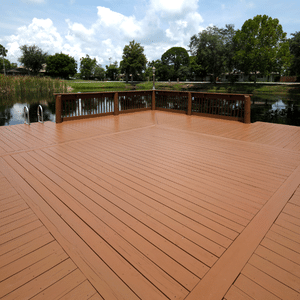
Restore and protect your deck with high-quality paints or stains that enhance the look while standing up to local weather.

Residential Cabinet Painting

Cabinet Painting

Transform kitchens and bathrooms with factory-smooth cabinet finishes using proper sanding, priming, and long-lasting coatings.

Residential Drywall Repair

Drywall Repair

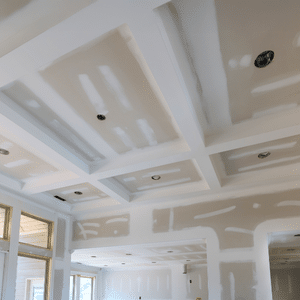
Fix holes, cracks, and damaged areas with seamless patching and finishing—moisture resistant, ready for paint so walls look like new.

Our Commercial Services

Commercial Interior Painting

Commercial Interior Painting

Keep your business looking sharp with fast and professional interior painting designed for clean results and lasting durability.

Commercial Exterior Painting - Commercial Painting

Commercial Exterior Painting

Make a strong first impression with exterior painting that improves appearance, protects surfaces, and holds up to heavy exposure.

Commercial Wallpaper Removal

Wallpaper Removal

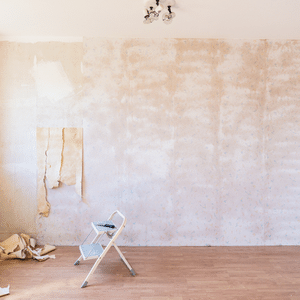
Remove outdated wallpaper safely and cleanly, then prep walls properly so the surface is smooth, uniform, and paint-ready.

Commercial Concrete Staining & Epoxy Finish

Concrete Staining & Epoxy Finish

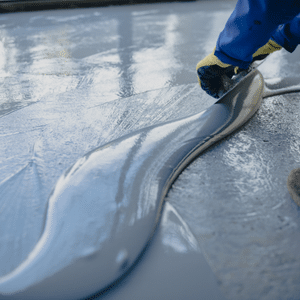
Upgrade concrete floors with decorative staining or epoxy finishes that add durability, easy maintenance, and a clean, polished look.

Powerwashing

Power
Washing

Powerwashing removes dirt and grime from exterior surfaces, restoring curb appeal and prepping areas for longer-lasting paint.

Brands We Use

We work with premium, trusted paint brands for durable finishes.